Beyond the Coil: How Modular Design Delivers Faster Lead Times and Better Service
When people think about induction heating, they often picture the coil first. Coil design is essential, but it is only one part of a complete system. Power modules, cooling circuits, controls, safety systems, and mechanical layout all work together to determine how that system will perform across years of production.
At ThermESC, we take a broader view. We design induction systems using a modular architecture that improves lead times, simplifies service, and supports long-term reliability. This approach is strengthened by our close partnership with ESC Induction, known for custom machinery and automation lines, and Thermo International, known for field-ready heating solutions and inductors. Together, we build systems that are not only powerful and efficient, but also practical to maintain and upgrade over time.
This is what we mean by going “beyond the coil” in induction system design.
What Is Modular Induction System Design?
Modular design means building an induction system from well-defined building blocks rather than creating a single, fixed structure. Instead of one large, monolithic unit, the system is broken into sections that can be individually assembled, serviced, and, when needed, replaced.
Typical modules include:
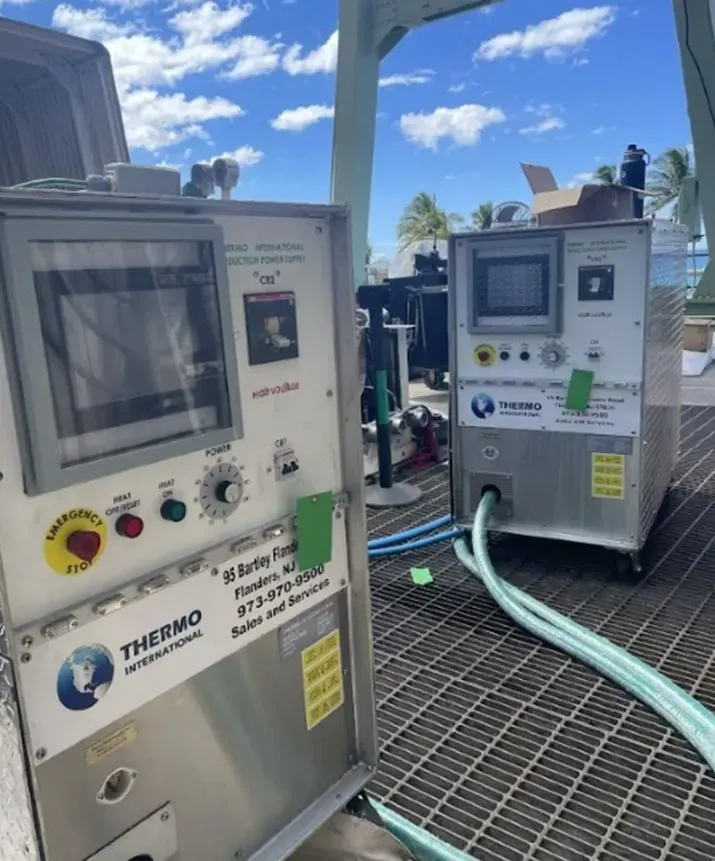
- Power sections sized to match application needs
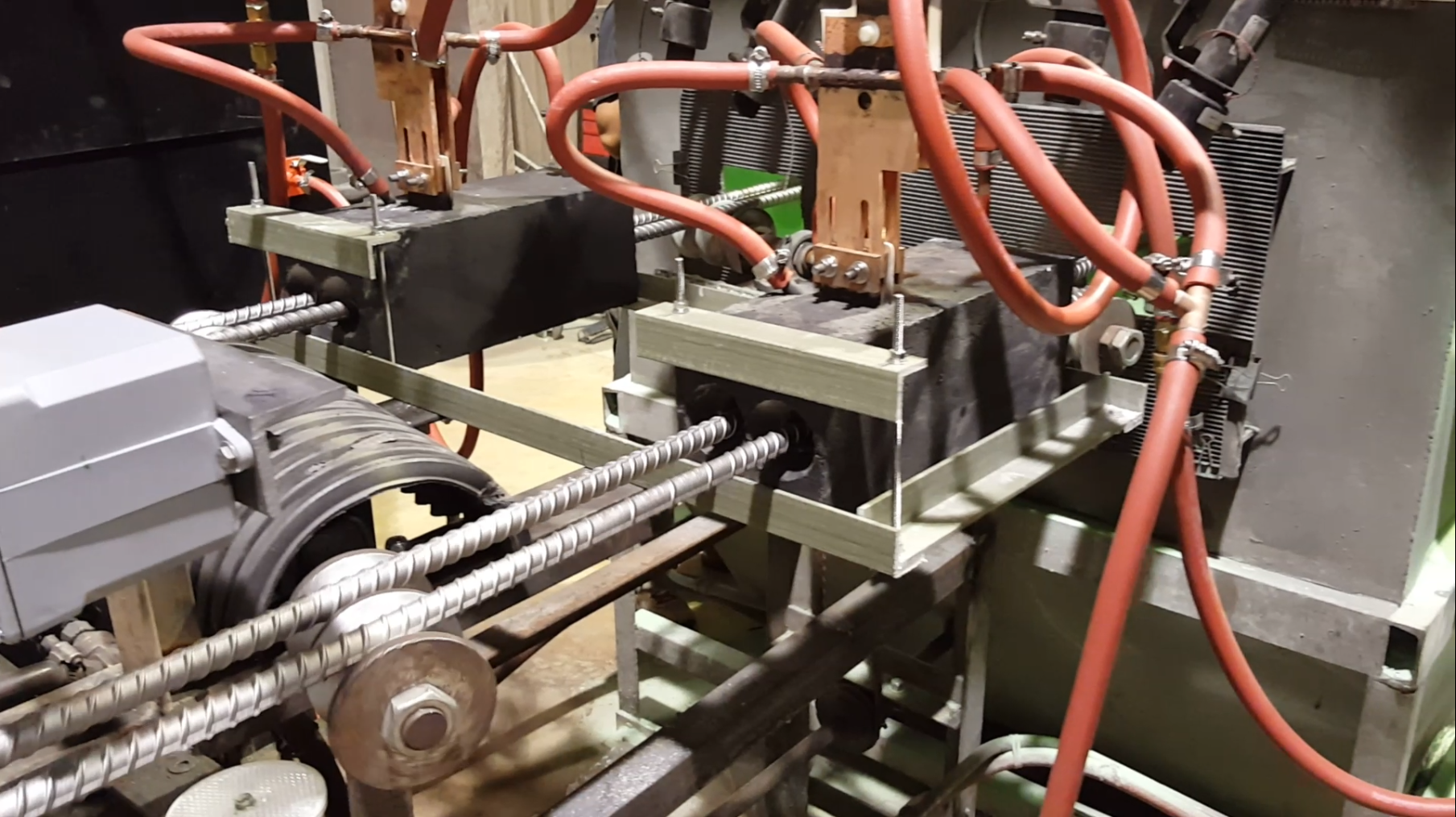
- Coil and transformer assemblies designed for specific parts or processes
- Cooling circuits and manifolds that can be isolated and serviced
- Control panels and PLC enclosures with organized wiring
- Mechanical frames and stands that accept multiple coil or product configurations
Each module has a clear purpose and connection point. This structure simplifies everything from initial assembly to future expansion.
How Modular Design Improves Lead Times
One of the most immediate benefits of modular architecture is faster delivery.
Standardized Building Blocks
At ThermESC and ESC Induction, many power sections, cooling components, and control layouts are based on proven designs that have already been engineered and tested. These elements can be configured to match a new project without starting from a blank page.
This means:
- Less engineering time required for each project
- More predictable manufacturing schedules
- Components that can be prepared in parallel instead of sequentially
By combining standard modules with custom coil and application engineering, we balance flexibility with speed.
Parallel Assembly and Testing
Because modules are distinct, different parts of the system can be assembled and tested at the same time. Power sections, cooling skids, and control panels can be built on separate workstations. Coils may be designed and fabricated in parallel by ESC Induction or Thermo International, depending on the application and location.
This reduces bottlenecks inside our own facilities and shortens the overall project timeline for the customer.
Faster Approvals and Fewer Revisions
Modular design also makes it easier for customers to review layouts and approve designs. When the major functional blocks are already defined, we can show customers a clear picture of cable routing, service access, footprint, and future expansion options early in the process.
Fewer unknowns result in fewer late-stage changes, which keeps projects moving forward.
Serviceability: A Long-Term Advantage
While faster lead time is important, the real test of an induction system occurs years after installation. It matters how easy it is to maintain and how quickly it can be restored when something fails. Modular design provides several advantages here.
Easier Troubleshooting
When a system is built from clear sections, technicians can isolate issues more quickly. Power modules, cooling skids, and control enclosures each have defined boundaries and documentation.
For example:
- If a cooling issue appears, technicians can focus on the cooling module instead of tracing lines through the entire machine.
- If a power irregularity occurs, attention can be directed to a specific power block rather than the full cabinet.
- If coil performance changes, coil and transformer modules can be inspected or swapped without dismantling the entire system.
This clarity reduces diagnostic time and helps plants get back to full production faster.
Faster Component Replacement
In a modular architecture, many elements can be replaced as complete units. A power module, a cooling assembly, or a control panel can be removed and swapped for a prepared replacement in less time than it would take to rebuild those functions in place.
ThermESC, ESC Induction, and Thermo International support this approach by:
- Maintaining consistent design standards across projects
- Offering replacement assemblies when needed
- Designing coils and inductors for practical removal and installation
This is especially valuable for facilities that operate with tight maintenance windows or limited shutdown periods.
Safe, Clear Service Access
Modular systems are easier to service safely because panels, access doors, and isolation points are planned intentionally. Technicians know where to open, what to isolate, and how to work around high-voltage and high-current sections without guesswork.
Good serviceability is not an afterthought. It is built into the design from the start.
Scalability and Future Upgrades
Another major benefit of modular design is the ability to adapt as production requirements change. Very few plants stay exactly the same for the entire life of an induction system. New product sizes, expanded lines, or higher throughput targets often appear over time.
Adding Capacity
If a facility needs more power, additional power sections can often be added alongside existing modules, as long as the original design planned for that possibility. This avoids a full system replacement and significantly reduces cost and disruption.
Changing Coils or Processes
Because coils and transformers are treated as distinct modules, they can be redesigned or swapped to support new part geometries or new coating requirements. ESC Induction and Thermo International both provide coil and inductor expertise, which helps customers respond to new product demands without rebuilding entire systems.
Integrating New Automation or Monitoring
Modular control architectures make it easier to introduce new sensors, data logging, or plant-level communication. When the control panel is clearly defined and documented, it is simpler to integrate with updated PLCs, supervisory systems, or plant networks.
In short, modular design protects your investment by keeping more upgrade paths open.
Real-World Impact for Manufacturers
For many manufacturers, the practical results of modular design can be summarized in a few key points.
- Shorter lead times: Projects move from design to installation more quickly.
- Reduced downtime: Systems are easier to diagnose and repair.
- Lower lifecycle cost: Replacement and upgrade work is more targeted.
- Improved safety: Service access and isolation are clearly defined.
- Greater flexibility: Systems can adapt as products and processes change.
These advantages are most powerful when supported by teams who understand both design and field realities. ThermESC, together with ESC Induction and Thermo International, brings that full perspective, from engineered layouts to installation, training, and long-term support.
Partnering With ThermESC for Modular Induction Solutions
Choosing an induction system is not only about coil design, kilowatts, or control panels. It is also about how well that system will fit into your plant today and how easily it can be supported tomorrow.
By focusing on modular design, ThermESC helps manufacturers reduce risk, improve uptime, and keep options open for future growth.
If you are planning a new induction project or considering an upgrade to an existing line, our team can review your goals and show how a modular approach might benefit your operation.
Contact ThermESC to discuss your application:
Phone:
970-483-5232
Website:
www.thermesc.com
Share with Your Network